| Castle Sinclair Girnigoe, Caithness (Name altered to reflect latest research carried out by the trust) Map Ref: ND 378549 Castle Sinclair Girnigoe Web Site Sinclair & Girnigoe Castle
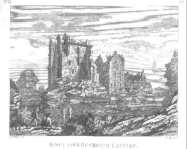
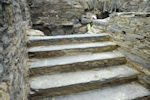
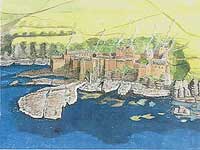
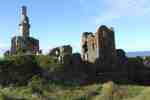
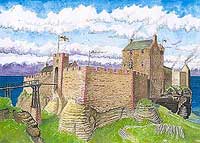
Photo Gallery 30 June 2013 CASTLE SINCLAIR GIRNIGOE, CAITHNESS Much has been written on the history of this spectacular ruin dramatically situated on cliffs projecting into Sinclair Bay about three miles north of Wick. The books basically tell us that this icon the County were two castles – one being the tower house built between 1476 and 1496 which was called Girnigoe and the other called Sinclair was built on land to the west in 1606 – and that they were partially destroyed by George Sinclair of Keiss who attacked it with cannon in either 1680 or 1690 (depending on the author) to oust John Campbell of Glenorchy to whom it had been given by George 6th Earl of Caithness in lieu of debts. These ‘facts’ have been embellished and embroidered over time by a number of different authors. Since 1998 archaeological work and research of primary documentation carried out by the Clan Sinclair Trust, which owns the property, has proved that, like so much of our ‘history’, the truth is very different and more interesting. Being such a strategic position, the site has been occupied for thousands of years. We have found a lot of evidence of occupation by Neolithic people (4500 to 2000 BC) and some of Mesolithic people before them. What the original building was we have no idea but the fortification would have been towards the end of the peninsular beyond what is now the inner moat on the land where the current tower house and outbuildings stand. The Trust needs to carry out more work and research to establish a likely date but we do know that it was used in the late 1300s. It would have been strongly fortified with a dry moat at its front and this is our best guess of what the castle looked like then. 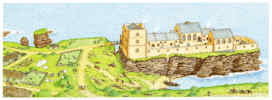 It was soon after Sir William Sinclair of Roslin, 3rd Earl of Orkney, was granted the title of Earl of Caithness in 1455 that some major changes took place. He and his son, who was to inherit the title, were well aware that they would have to forfeit the title of Earl of Orkney and also their castle there in Kirkwall when Orkney, which belonged to Norway at that time, became part of Scotland and which happened in 1470. However given the strategic position adjacent to the major trade route of the Pentland Firth they needed to maintain a stronghold in the area to protect the family interests and so started to update Castle Girnigoe, as it was then called, which they already owned. They extended the castle by digging another dry moat which formed a continuation of the goe on the south of the peninsular and connecting it to the sea thus enclosing another parcel of land. They used the excavated stone to build on it and linked it to the original fortification by a drawbridge over what had now become the inner moat. In the early 1500s we believe the castle would have looked like this. 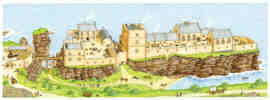 At this stage the castle was still a defensive stronghold to withstand all attacks but times were changing. Weaponry was becoming more powerful and cannons were more reliable, accurate and bigger thus making a building even of stone less secure if attacked and the Renaissance period was in full swing. Throughout Europe social attitudes and architecture were changing. Just like today every family wanted the latest fashion and design. The then wealthy Sinclair family was no exception and the existing accommodation needed to be modernised and adapted. A period of aggrandisement followed which included a new tower house, chapel, banqueting chamber entered by a square un-defendable staircase, closets and larger widows with leaded lights. This was the heyday of the castle which was transformed by the early 1600s into a grand mansion which incorporated all the latest ideas. The artist’s impression gives a good idea of what it looked like. 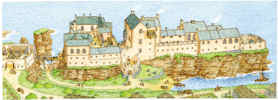
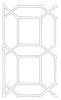
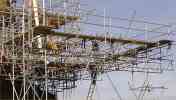
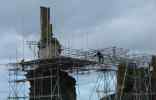
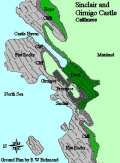
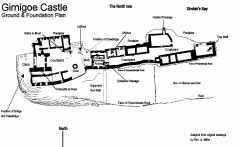
 Design of leaded lights in windows Palazzo Vecchio, Florence It is clear that, far from being built in two periods as the ‘history’ books tell us it was, the castle was regularly altered to take account of each generation’s needs and taste in just the same way as we alter our houses today. This is obvious when looking at the ground plan. 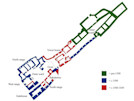  The bit in the ‘history’ books that is correct is that John Campbell of Glenorchy became owner, not only of the castle, but all the family estate in settlement of the debt that had been accumulated through the lavish expenditure by the 5th and 6th Earls on all their castles. This problem was compounded by the Civil War in the 1650s which saw the occupation (and damage) of the castle by Cromwell’s troops and which became his main garrison in the north. John Campbell was a fourth cousin of George 6th Earl and was also left the title of Earl of Caithness when George died in 1677. This transfer was initially ratified by the Scottish Parliament. However George Sinclair of Keiss, a first cousin, claimed the title and the lands. In January 1680 to thwart John Campbell from occupying the castle he enrolled as many able bodied men from Wick as he could, entered the castle and systematically removed or destroyed the roofs and some of the walls and floors. He did the same at Thurso East Castle but that damage was repaired. In July that year John Campbell and his men slept in the fields adjoining the castle on the eve of the Battle of Altimarlach. In 1681 George Sinclair was granted the title of Earl of Caithness by the Privy Council but it agreed that John Campbell was the rightful owner of the land. Castle Sinclair Girnigoe was never restored and there is no evidence of an attack by cannon. Robbing of stones by humans is the primary cause of the ruinous state western part of the castle. The eastern part was saved the same fate as the inner moat proved an effective barrier once the drawbridge had been destroyed. It was bought back into the Sinclair family by the 19th Earl of Caithness in 1953 and in 1999 was donated by his son to the Clan Sinclair Trust, a limited company with charitable status that has carried out all the research, conservation and restoration work. The castle in its heyday (early 1600s) compared to the castle today The castle is owned by the Clan Sinclair Trust, a limited company with charitable status. It is a scheduled monument and was listed in 2002 by the World Monuments Fund in its Watch List of the 100 Most Endangered Sites in the World. It is the only castle in Scotland to be so listed. As a result of the conservation and preservation works part of it is open to the public year round. Location plan 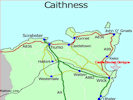 |
|
|
Girnigoe/Sinclair
Castle and the Earls of Caithness William Sinclair
was created Earl of Caithness in 1455 by King James II of Scots
(1437-1460). By 1470 William reluctantly resigned his title Earl of
Orkney with his
William as 1st Earl of Caithness and Earl or 'Jarl' of Orkney is most noted in history for the construction of Roslin castle and the ornate Rosslyn chapel in Mid Lothian in the 1440's. His son, also William,2nd Earl of Caithness built Girnigoe and the castle of Knockinnan near Dunbeath some time after 1470 and before his death at the battle of Flodden in 1513 along with King James IV of Scots (1488-1513). His son John then became 3rd Earl of Caithness and he too, as already noted, was slain in battle in 1529,leaving his son George to inherit Girnigoe as 4th Earl of Caithness. Anciently a third of the lands of Caithness, including the future site of Girnigoe were held by the Cheyne family. Around 1350 (some accounts claim 1354) Reginald Cheyne, the Clan head, died ending the male line of descent, leaving two daughters to inherit the Cheyne estates. One of his daughters married on to the Keiths while the other is alleged to have married on to the Sinclairs, dividing the estate into two. Which would explain why the Keith tower of Ackergill is only one mile away from the Sinclair fortalice of Girnigoe. However this alleged marriage appears false since the Sinclair claim to Caithness was based on the original Jarldom of Orkney and Caithness so in theory they also held rights to the lands of Ackergill. The two castles of Ackergill and Girnigoe held by two rival families so close together was bound to lead to violence. Not only between the Keiths and Sinclairs but with the Sunderlands, Oliphants and Mackays who also held lands around Caithness. In fact these feuds got so out of hand that even the Campbells from further afield got involved. It is also stated that Reginald Cheyne's second daughter in actual fact married Nicholas Sutherland since this was how the Sutherlands obtained the Cheyne castles of Old Wick and Berriedale which then passed to the Oliphants and Forse castle which passed to the Keiths. Interestingly both Old Wick and Berriedale were later annexed by the belligerent Sinclairs in their attempts to rule the whole of Caithness. In I544 George 4th Earl of Caithness seized the Episcopal fortress of Scrabster castle, north of Thurso, from Alexander Gordon, a son of the Earl of Sunderland who had been installed as a temporary Bishop while the Bishop of Caithness was banished. Later when the Earl of Sunderland was made hereditary keeper of Scrabster castle it was described as being "situated among the wild and uncivilised Scots". This phase though directed at the Caithness area in general surely sums up the lifestyle of the Sinclairs of Caithness. In 1547 George sallied forth from Girnigoe to attack and seize Ackergill castle, taking Alexander Keith said captain and his servant John Skarlet hostage. Detaining them not only at Girnigoe but at the moated oblong tower house of Braal near the river Thurso. Which had only recently passed to the Sinclairs from the Crichton family. Why Keith and Skarlet were moved between these two strong castles and other unspecified locations is unclear. Likely it was in case the Keiths mounted a rescue attempt. Or it may be that any assault on Ackergill by the Keiths would result in the deaths of the hostages. So Keith and Skarlet were bargaining chips. Despite his high handed behaviour George was given remission for his actions by Queen Mary the Regent (Mary Queen of Scots mother). By 1549 Queen Mary installed Lord Oliphant as keeper of Ackergill possibly to separate the feuding Keiths and Sinclairs until a more permanent solution regarding ownership of Ackergill could be arranged. Also in 1549 George was distracted from this feud, for a time, while be began building the long Z-plan tower house of Barrogill castle near John O' Groats, known today as Castle Mey held by Elizabeth The Queen Mother. In 1556 George again besieged Ackergill when it was in the hands of William Keith Earl Marischal. This time though he appears to have stormed the barmkin wall but been unable to secure the tower house. Yet again he was given remission for his actions which angered the Keiths. George's attacks were not only confined to local rival Clans but on his own kin Sinclair of Dunbeath ,descended from a younger brother of the 3rd Earl of Caithness, noted in possession of Dunbeath castle in 1529,who built the L-plan tower house of Dounreay in the 1560's. As the dispute escalated Dounreay castle was besieged by a Sinclair army from Girnigoe. The outcome of the siege appears to be unrecorded. In 1567 at Helmsdale castle during a banquet, George arranged for John 11th Earl of Sunderland, his wife Helen and family to be poisoned by Isobel Sinclair the Earl of Sunderland's aunt. The plan was that Isobel's son would inherit the Earldom of Sunderland. So these estates could be seized by the Sinclairs. However, her son was accidentally poisoned and died along with the other guests aside from the true heir who was able to escape and inherit as 12th Earl of Sunderland. As time progressed George became so extreme in his activities that by 1571 he, it is alleged, even arrested his own son and heir, John, Master of Caithness, imprisoning him in one of the cells of Girnigoe on suspicion of rebelling against his rule as Justiciary of Caithness. Certainly in 1569 John had clashed with the Oliphants in the village of Wick resulting in him besieging Lord Oliphant in the oblong keep of Old Wick castle for eight days, until Lord Oliphant was obliged to surrender due to lack of food and water as noted in the report sent to the Privy Council. It appears the Sinclairs then continued to occupy Old Wick. And in 1570 John had burnt down Dornoch Cathedral and sacked the town. But there was no suggestion of him trying to seize Girnigoe or Knockkinnan. Surprisingly other historians have unearthed another reason for John's imprisonment. On one hand George as Justiciary of Caithness as an official had to be seen to rebuke his son. But apparently behind the scenes he was furious at his son's "lenity towards the town folk of Dornoch". John simply wasn't as ruthless and efficient as his father leaving witnesses behind to complain to the Privy Council. Because John took too long to die (seven years) his father had him fed on nothing but "salted beef, and then, with holding all drink from him, left him to die of a raging thirst". Although other accounts claim John died at Knockinnan. In 1582 John's son George inherited as 5th Earl of Caithness. One of his first actions as Earl was to kill the two jailers responsible for his father's murder,for which he received a remission from the Privy Council as such action was justifiable. He then started a raiding campaign against the Earl of Sunderland which was unacceptable to the Council and he was bound over to keep the peace. In 1588 he resisted a 12day siege at Girnigoe by the Earl of Sunderland who failed to make an real impression so the surrounding lands were sacked and Keiss castle across the bay from Girnigoe was damaged before the raiders withdrew. George then repaired Girnigoe adding the ornate oriel window. Around the same time the Sinclair family as a whole undertook a great building work. In 1592 they added a new wing to Cadholl castle. In 1600 a cadet branch of the Dunbeath Sinclairs built the L-plan tower of Brims castle at the same time as George rebuilt Keiss as a Z-plan tower. Also to keep up with his kin George began building the new cluster of towers in front of Girnigoe known as Sinclair castle as a symbol of his wealth and power. In 1606 he acquired Berriedale castle adding it to the long list of Sinclair strongholds throughout Caithness. With his empire expanding George quickly ran short of funds so he resorted to minting his own forged coinage at Girnigoe castle to circulate throughout the North of Scotland to try and cover his many debts. He like his ancestors before him also interfered in local feuds when he sent Clan Gunn disguised as Clan MacKay of Dirlot castle (which originally belonged to the Gunns) to burn Lord Forbes corn. When the MacKays sent witnesses to prove they were innocent George had them drowned so no links could be traced back to him. In 1623 Girnigoe/Sinclair castle and Ackergill (which had recently passed legally to the Sinclairs) were stormed and sacked by Sir Robert Gordon of Sutherland. The Gordons also appear to have assaulted Braal but were unsuccessful in taking this tower but damaged the new Manor house which was under construction nearby. In 1643 George died, as he was predeceased by his son, Lord Berriedale and grandson, the Master of Berriedale, his title and debts passed to his great grandson also George 6th Earl of Caithness. In 1651 Oliver Cromwell's troops seized and damaged Dunbeath, Dounreay and Ackergill. Cromwell also sent a garrison of 70 foot and 15 horse to hold Girnigoe/Sinclair castle. Despite family debts George started building Thurso castle and married a daughter of Campbell, Marquis of Argyll perhaps in an effort to cover his great grandfather's debts as the Campbells were major creditors. But when he died without issue in 1676,his widow married her own kinsman, Sir John Campbell of Glenorchy who then claimed Girnigoe/Sinclair castle and estates including the title Earl of Caithness. Which resulted in the rightful heir, George Sinclair of Keiss castle storming Girnigoe/Sinclair and Old Wick castles by force of arms in 1679 to contest his right as Earl of Caithness which had been denied him by law. In reply in 1680 the Campbells marched north in an attempt to seize Old Wick castle under cover of any early morning mist. Suddenly the fog cleared and the castle garrison raised the alarm sending riders to Girnigoe/Sinclair castle. The Campbells appeared to withdraw but split their forces into two to ambush and rout the Sinclair army from Girnigoe/Sinclair at the battle of Altimarlach some four miles from Wick. Girnigoe/Sinclair was then stormed by the Campbells and Keiss castle damaged (today there are still musket holes above the doorway of Keiss from this assault). In 1690 George Sinclair of Keiss again besieged Girnigoe/Sinclair castle this time with heavy cannon ironically destroying his inheritance. The castle though back in Sinclair hands with George as 7th Earl of Caithness was abandoned as a residence leaving the sad shell that remains today. Also See: |
24 February 08 3 September 06 4 October 04 20 September 04 29 August 04 11 April 03 22 August 04
October 04 |