|
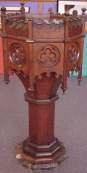
Church Font
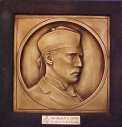
Sir
William Smith
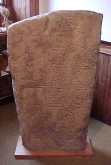
Pictish
Stone
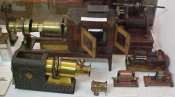
Camera
Display
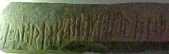
Runic Stone
|
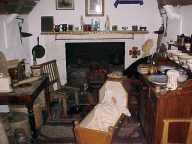
Room From The Past
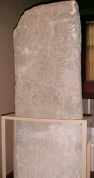
Ancient
Standing Stone
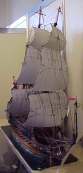
Model
of Yacht

Geology
Exhibit
Open Daily
June - September
Morning 10.00am - 1.00pm
Afternoon 2.00pm - 5.00pm
Located near
Thurso Town Hall
Chairperson
Mrs E
Angus
1 Oldfield Hill, Thurso. Caithness
01847 892459
Secretary
Mrs I Corner
Morven, Olrig Street, Thurso. Caithness
01847 892875
|
Update 14 October 2011
The collections are now housed in the Caithness Horizons Centre
formerly the Thurso Town Hall and Carnegie Library in Thurso
April 2006
Thurso Heritage Centre Closed Until New Centre Completed
Closed until the new Caithness Horizons project opens with a new
centre at Thurso Town Hall at end of 2007. All items have gone
into storage and will be put back on
display in the new Caithness Horizons centre.
14 April 03
THURSO HERITAGE MUSEUM
Lyn Leet
Introduction
Thurso Heritage Museum has been located in the former Carnegie Library
since the late 1960s, after the library was moved to Davidson’s Lane.
The museum is run
by the Thurso Heritage Society, a voluntary body who open it to the
public from June to September. The building is owned by the Highland
Council. The museum finances itself on the entrance charges.
The current
situation
The museum is under threat due to the proposed refurbishment of the
building which it occupies, to be carried out by the Highland Council.
The proposal is to connect it to the Town Hall in a major refurbishment
programme. Both buildings are very neglected and are in urgent need of
restoration and modernisation.
There has been a
museum in Thurso since Robert Dick, our famous geologist and botanist,
established a fossil museum in his house in the 1840s. Thurso Heritage
Museum contains an important collection and some of its contents are as
follows:
Stone collection,
including the Ulbster and Skinnet Pictish stones dating from the 700
AD, fossils, a Runic Cross, a fireplace stone, a marriage stone, Ye
Auld Fish Stane, Old St Peter’s font, the history of the flagstone
industry, a Bronze Age beaker and remains from Achavanich.
Robert Dick the
geologist and botanist’s collection and tapestry.
Sir John
Sinclair’s history, The Caithness Fencibles and Regimental flags. Lady
Janet’s embroidery.
Alexander Bain’s
electric motor and J Anderson’s wireless equipment
Period dresses,
uniforms and medals, including a kilt and dirk, bought by Thurso
Heritage Society.
Various oil
paintings, photographs and other artefacts.
Concerns
regarding the collection
Storage ( both during construction work and later)
In order to carry out the proposed alterations it would be necessary to
move the collection into storage. It is vital that this is carried out
under the supervision of a curator, who needs to be appointed before
the project starts. It is also essential that suitable storage is found
to preserve this collection as much of it is fragile. Proper storage
space must be provided within the new project so that exhibits can be
turned around and also be used as a workspace for the curator, both to
upgrade exhibits and for carrying out repairs. The proposal to have all
the storage off site will not work and would be expensive to operate,
involving transport costs with the added risk of damage to artefacts.
The Exhibition
Team
Thurso Heritage Society has an exhibits co-ordinator on its committee
who would be able to assist the curator in his/or her task with much
local knowledge and information on the collection.
A curator is now
essential, not only to maintain the collection but also to advise on
packing and crating it when it goes into temporary storage and returns
to its permanent home. A curator should work with the museum designer
so that the right choices are made. Ideally the museum would have the
same space as at present. Skilled displays and the use of modern
technology would be needed, if it is to be reduced, as this is an
important collection and Thurso’s heritage must be preserved. Any
artefacts which cannot be accommodated should go to a museum with a
Charitable Trust status, preferably in Caithness, where they belong.
The worst scenario would be for the exhibits to be put into storage and
never seen again, as has happened with the Bruce Buildings, the former
Wick Museum, now closed to the public.
Conclusion
Many people in Thurso, not just the Thurso Heritage Society, care about
what happens to the museum’s collection and recognise that it empowers
local people with knowledge of their own heritage. It is important to
preserve the collection and that the Thurso Heritage Society is
involved in the decision making, so that their knowledge is not lost.
We hope that the ‘Pictish Trail’ will bring more visitors to see our
Pictish stones.
|